What is a service receipt?
A service receipt documents payment for work performed rather than products sold. Unlike retail receipts that list physical items with prices, service receipts detail the labor, expertise, or professional work provided. They're essential documentation for consultants, contractors, repair technicians, freelancers, healthcare providers, and any business that bills for time, skill, or expertise rather than tangible goods.
Service receipts serve multiple purposes: they confirm payment to the client, provide documentation for the service provider's records, and create a clear record of work performed. A well-structured service receipt protects both parties by clearly documenting what service was provided, when, by whom, and for how much.
Essential elements of a service receipt
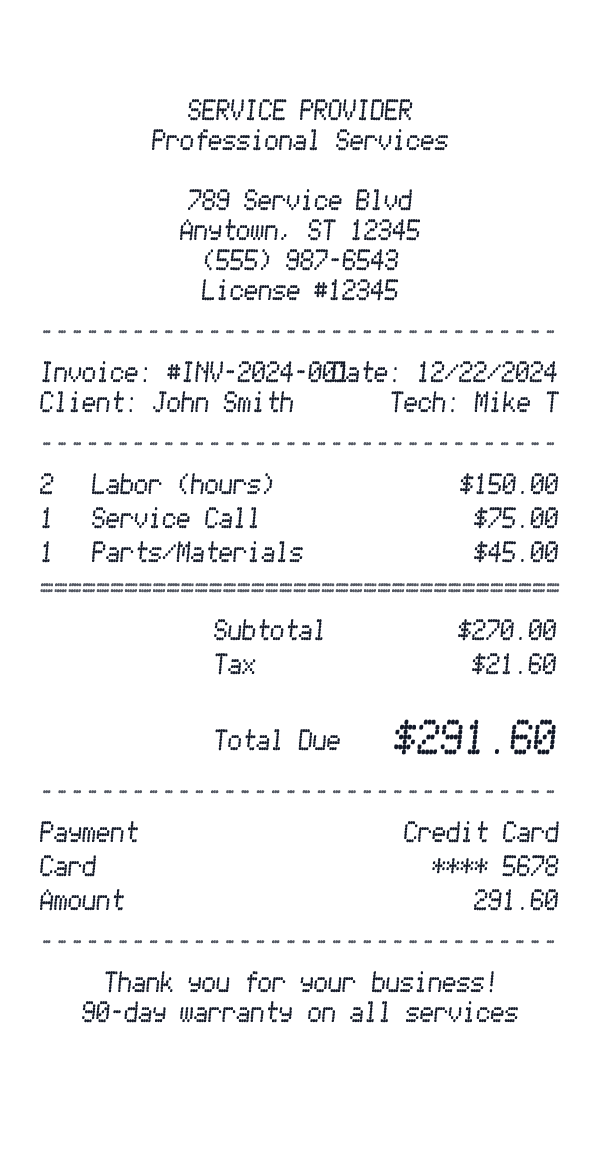
Every service receipt should identify both parties: the service provider (with business name, address, phone, and tax ID if applicable) and the client receiving the service. Include the service date or date range—critical for accurate record-keeping. The core of the receipt is the service description: what work was performed, expressed in terms the client can understand and that accurately represent the value provided.
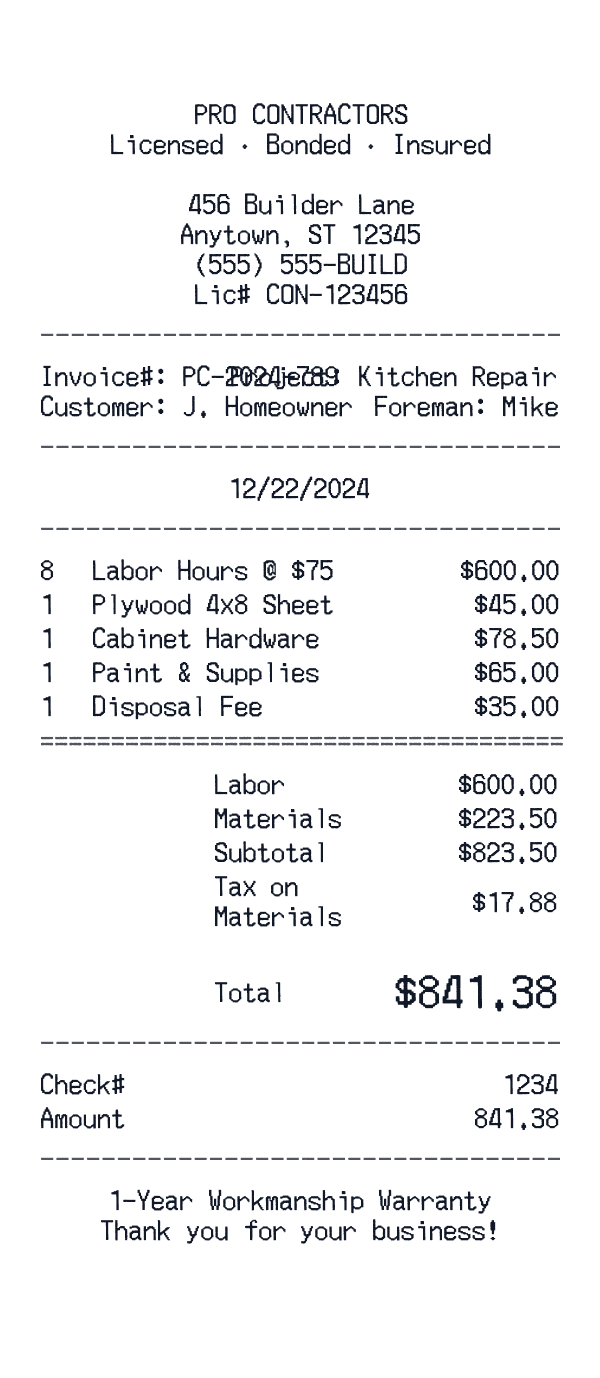
For time-based services, show hours worked and hourly rates. For flat-rate services, describe the scope of work covered by the fee. If materials were used, itemize them separately from labor—this distinction helps keep records clear and detailed. Include the payment amount, payment method, and date payment was received. A receipt number helps both parties reference the transaction in future communications.
Service receipts by industry
Different service industries have specific formatting conventions. Home repair and maintenance receipts typically describe the problem addressed, work performed, and parts used. Consulting receipts document the project phase, deliverables, or hours covered by the payment. Healthcare service receipts typically include provider credentials and procedure descriptions.
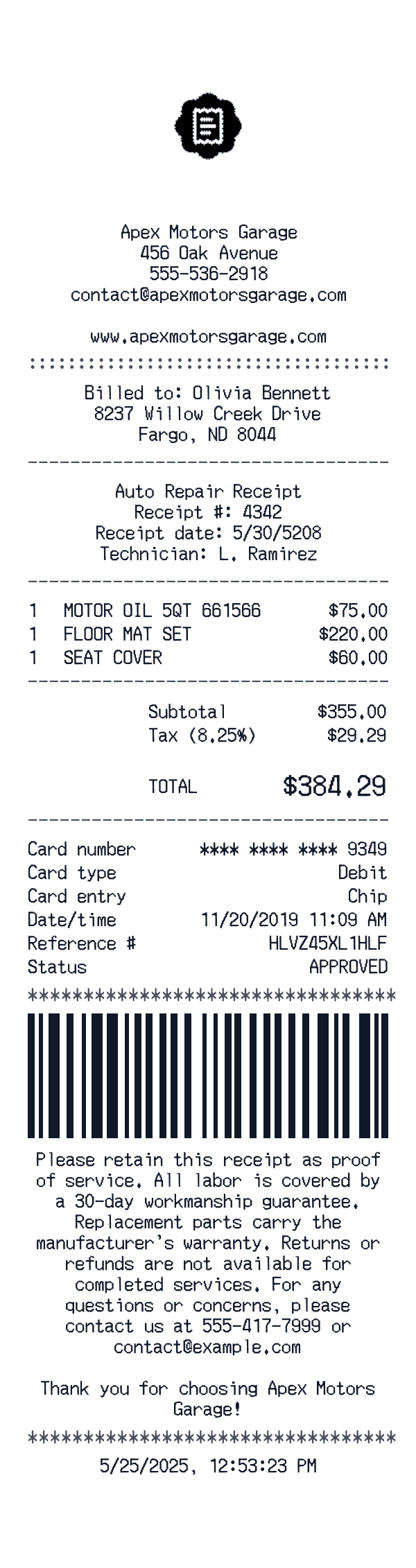
Auto service receipts are particularly detailed, showing labor hours, parts with part numbers, and the vehicle's mileage at service—important for maintenance records and resale value. Personal services like tutoring, personal training, or coaching document session dates, duration, and focus areas. Legal and professional services receipts reference matter numbers, billing descriptions, and may include trust account details for retainer payments.
Creating service receipts for your business
Start with your complete business information: legal name, address, phone, email, and website. If you're a licensed professional, include your license number—it adds credibility and may be legally required. Add your logo for professional branding. Create a clear service description section that accommodates the level of detail your work requires.
Build flexibility into your template for different service scenarios. Some jobs are simple one-line descriptions; others require detailed breakdowns of tasks performed. Consider including a 'Terms' section for payment terms or other notes. Add signature lines for a professional touch. Export as a digital file or print for your creative project.
Service receipt formatting best practices
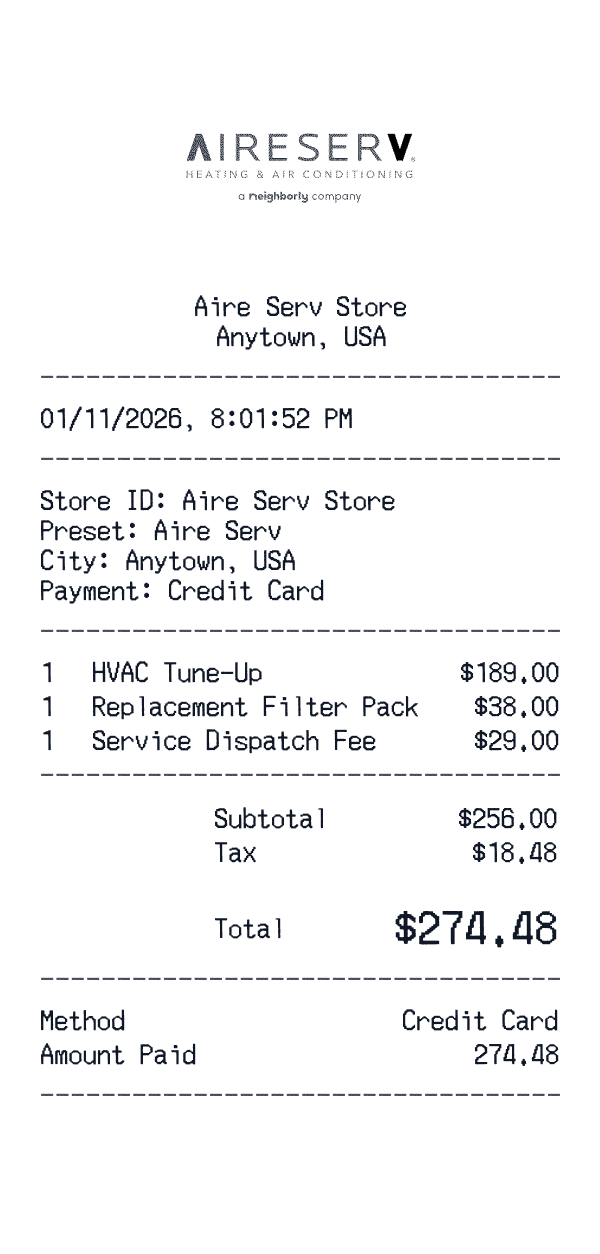
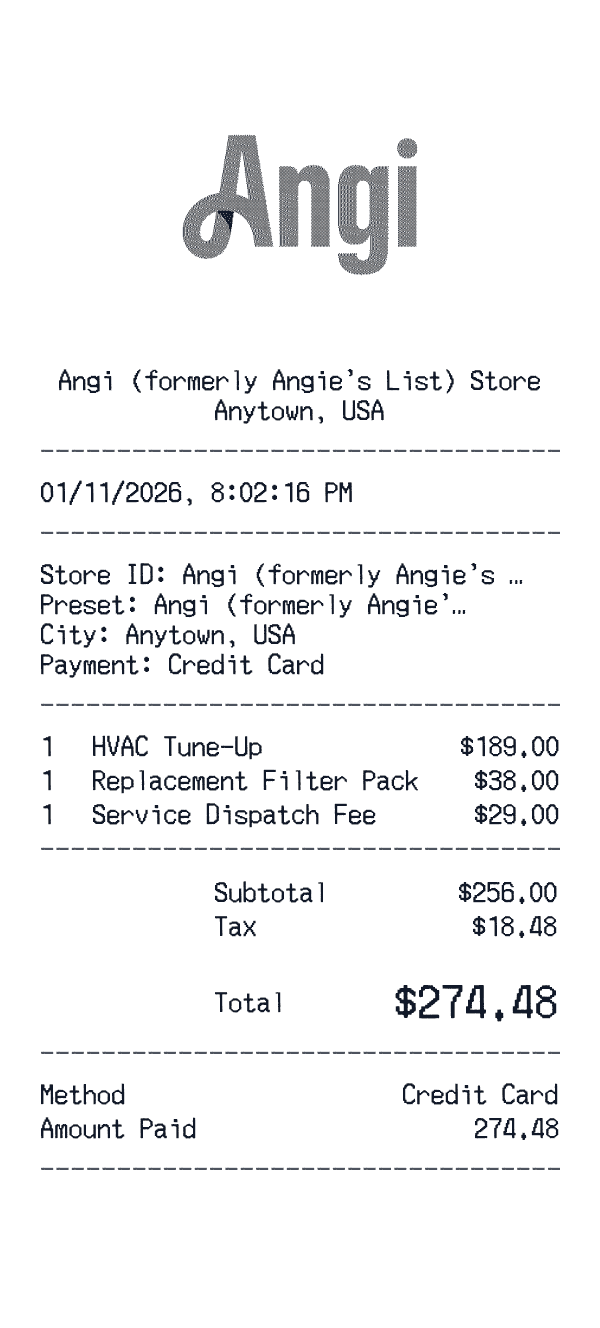
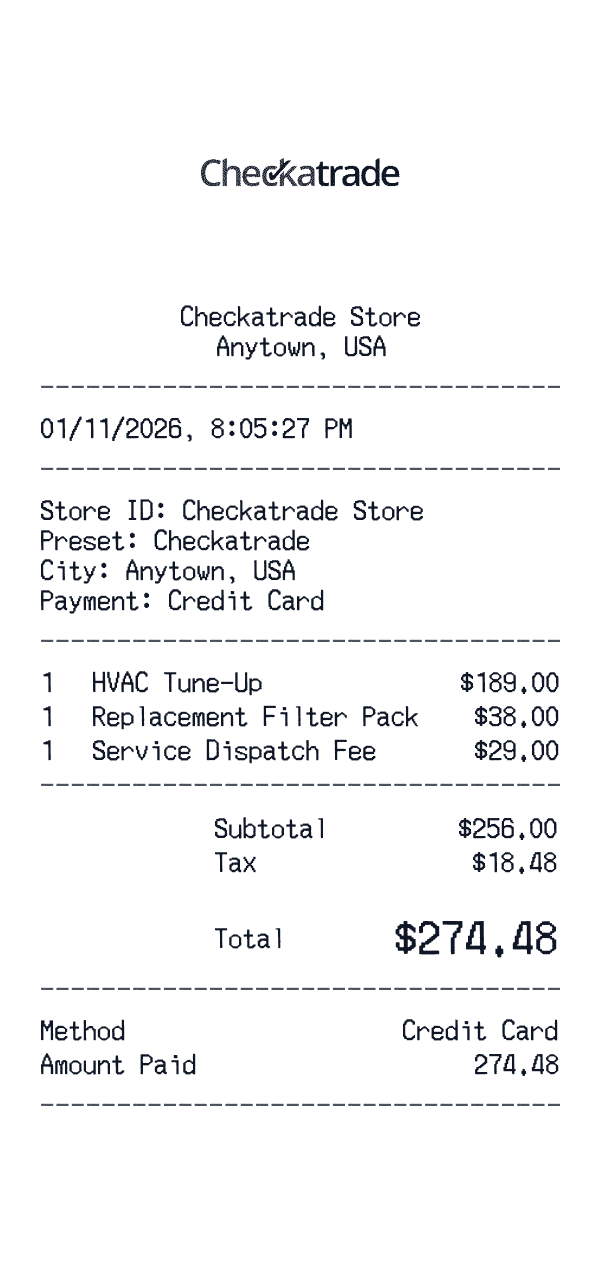
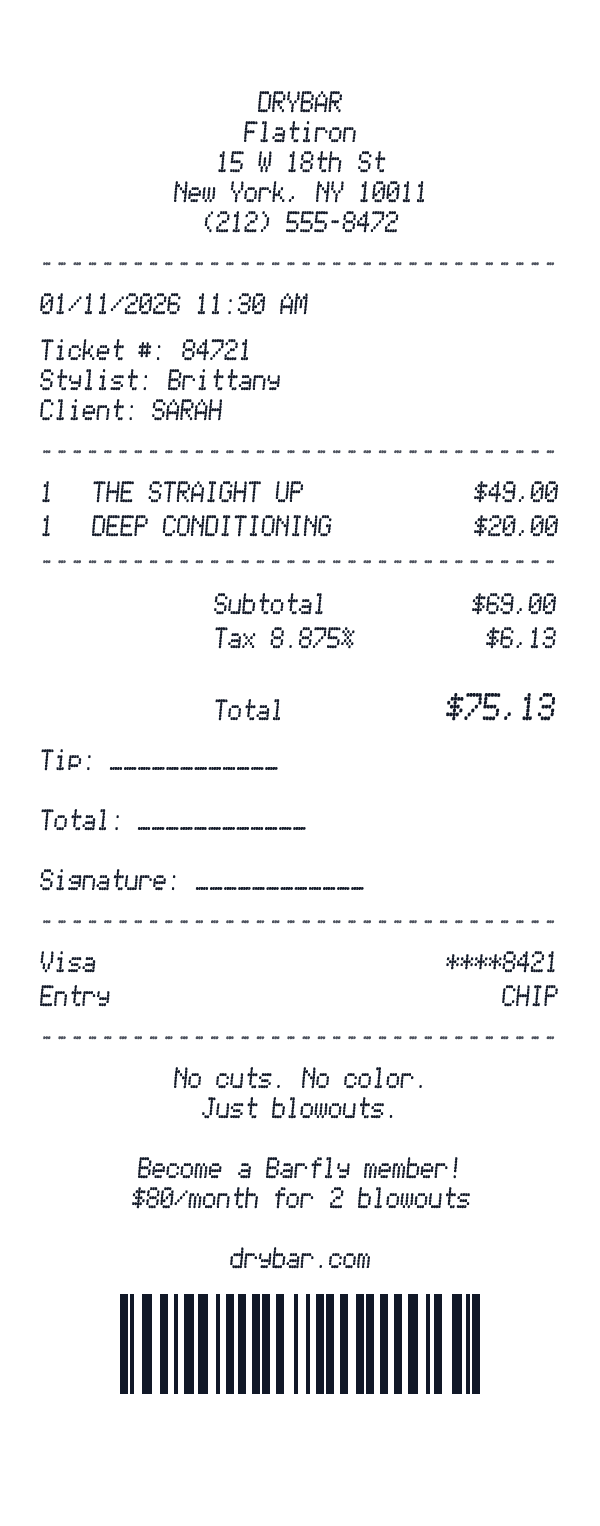
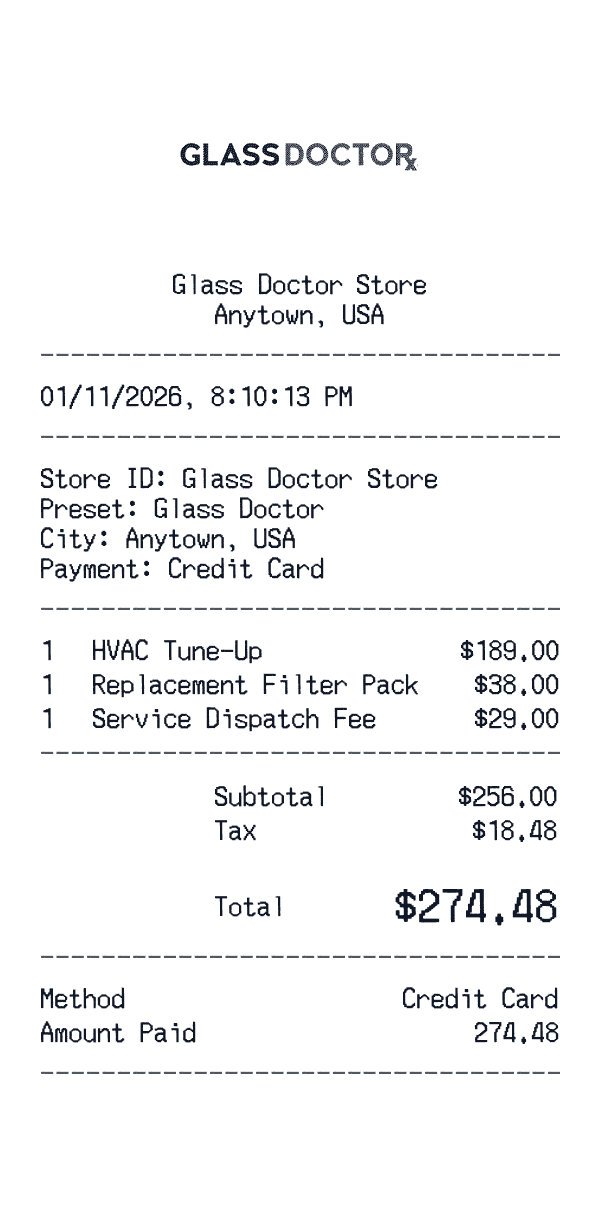
Service receipts typically include detailed descriptions of work performed. Our service receipt templates capture these standard formats, making them ideal for design mockups, creative projects, and personal use.
A detailed service receipt showing 'Complete HVAC system inspection and filter replacement' looks more professional than a vague 'HVAC service' notation. For ongoing service relationships, sequentially numbered receipts create a polished, systematic appearance. Our templates make it easy to create professional service receipt formats for any project.